Education
“What if the problem—the reason we never seem to reach our goals—isn’t that we’re not trying hard enough or spending enough money, but that we haven’t really thought carefully about the goals we’re trying to reach”.
Why We Teach Science (and Why We Should) - John L. Rudolph
Our Approach to Education
PMOS is widely under-diagnosed and many people, including those at risk, lack awareness of this syndrome. This gap in public knowledge became one of the driving forces behind our education work.
From there, our goals expanded: to offer insight into the world of synthetic biology, both to inspire young students and to help bridge the gap between the scientific community and the general public. Sustainability was a constant thread running through the project: These three pillars held the foundation of our education aims.
Overview Matrix
...
Synthetic Biology literacy
Student workshop at Ung Vetenskapssport
25th April, Ekologihuset, Lund university LTH campus with 30 Highschool students from all over Sweden
As a first event to promote synthetic biology literacy, we cooperated with Ung Vetenskapssport, an organization that holds every year science and problem solving events for students from all over Sweden. During their biology camp at Lund university we held a lecture and workshop on the topics of molecular and synthetic biology. The activity was greatly appreciated and we received meaningful feedback on how to improve our activities.
For this first activity, we welcomed high school students from all over Sweden to Lund University for a hands-on session designed to build on their existing biology knowledge while introducing them to synthetic biology and its applications.
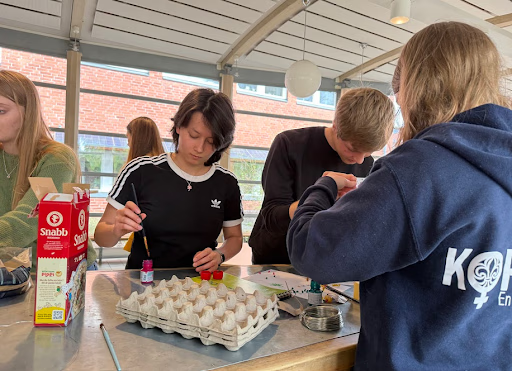
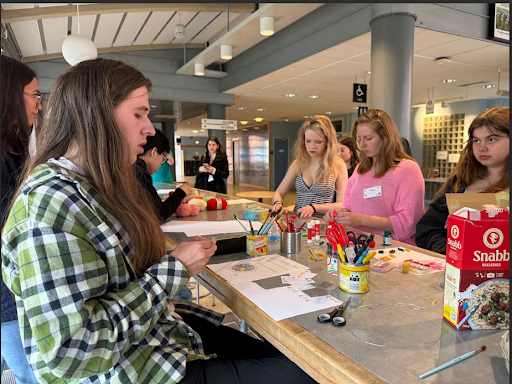
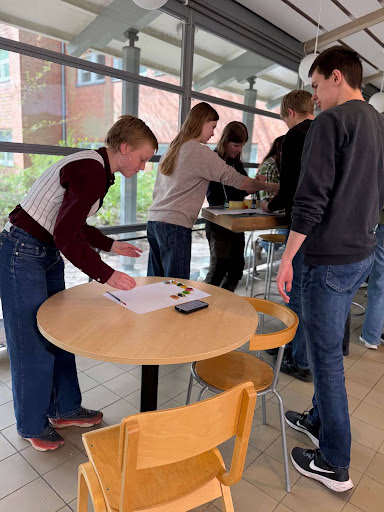
We opened with a short presentation covering the basics of molecular biology and an introduction to synthetic biology and our project, using guided questions rather than direct answers to keep students engaged, and closed with a quiz. Students then split into groups for a workshop activity, proposing their own solutions to a real-world problem they cared about. After a short exercise on codon–amino acid pairing, they got creative with a craft activity, building a plasmid from the different parts they'd learned about. We wrapped up with a group discussion where each team presented their solution and reflected on its ethical implications.
Around 30 students took part and gave us positive feedback. One wrote: "10/10, great! The crafts that were connected to it were so much fun and the lecturers were absolutely fantastic. How interesting!" We were glad to see several students particularly engaged with our project, asking follow-up questions about both the topic and the technical side of our solution.
Their feedback also helped us improve. Since students came from across Sweden with varying levels of background knowledge, we learned how important it is to keep everyone engaged and on the same page, adapting material on the fly when needed.
PMOS Awareness
PMOS awareness run
To kick off PMOS Awareness Month, we hosted a 2.5 km run in Lund with Too Motch café. The event aimed to raise awareness about PMOS and create a space for discussion. Participants connected through running, coffee and conversations about PMOS and research.
The event addressed the need to create a more accessible and engaging way for students and members of the local community to learn about PMOS, while connecting to the PMOS awareness pillar of the project. The event aimed to raise awareness about the fact that approximately 1 in 10 women are affected.
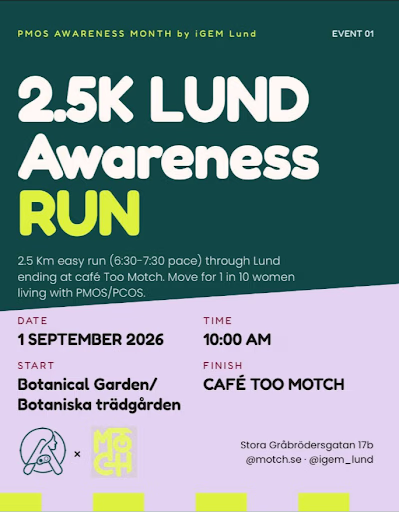
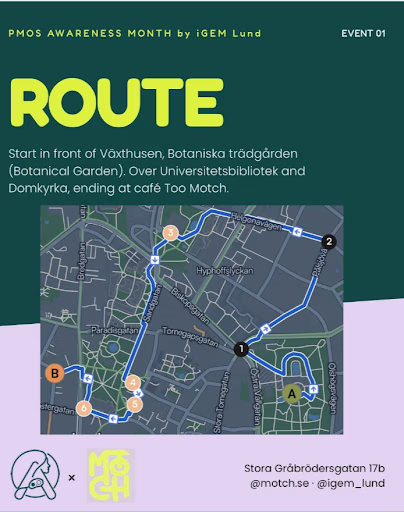
The event was a 2.5 km run through central Lund. We started in the Botanical Garden with a warm-up before running through Professorsstaden, past the university library and finally through Lundagård, with the full route shown in Figure 1. After reaching the end of the route, the participants split into two groups: one group completed a second lap, while the other stayed at the café. We then gathered at Too Motch, where participants could enjoy a discount on coffee and pastries in the café’s courtyard. This created a setting where we could continue the conversation through discussions about the PMOS project and student life (see Figure 2).
The event brought together approximately 15 participants that had seen the event on instagram, facebook or heard about it from friends. One aspect that worked particularly well was the combination of the run and the café gathering. The activity gave participants an opportunity to meet each other and engage with the topic in a relaxed environment. For future events, we learned that we should have the feedback QR codes printed for the participants, advertise the event in advance and include a flyer that gives more structured information about PMOS in order to further strengthen the participation.
Overall, the event brought people together while creating an engaging opportunity to discuss PMOS and the work of the PMOS project. We are very thankful to everyone that participated and to the café Too Motch for the collaboration.
Materials
Self scoring
Description